

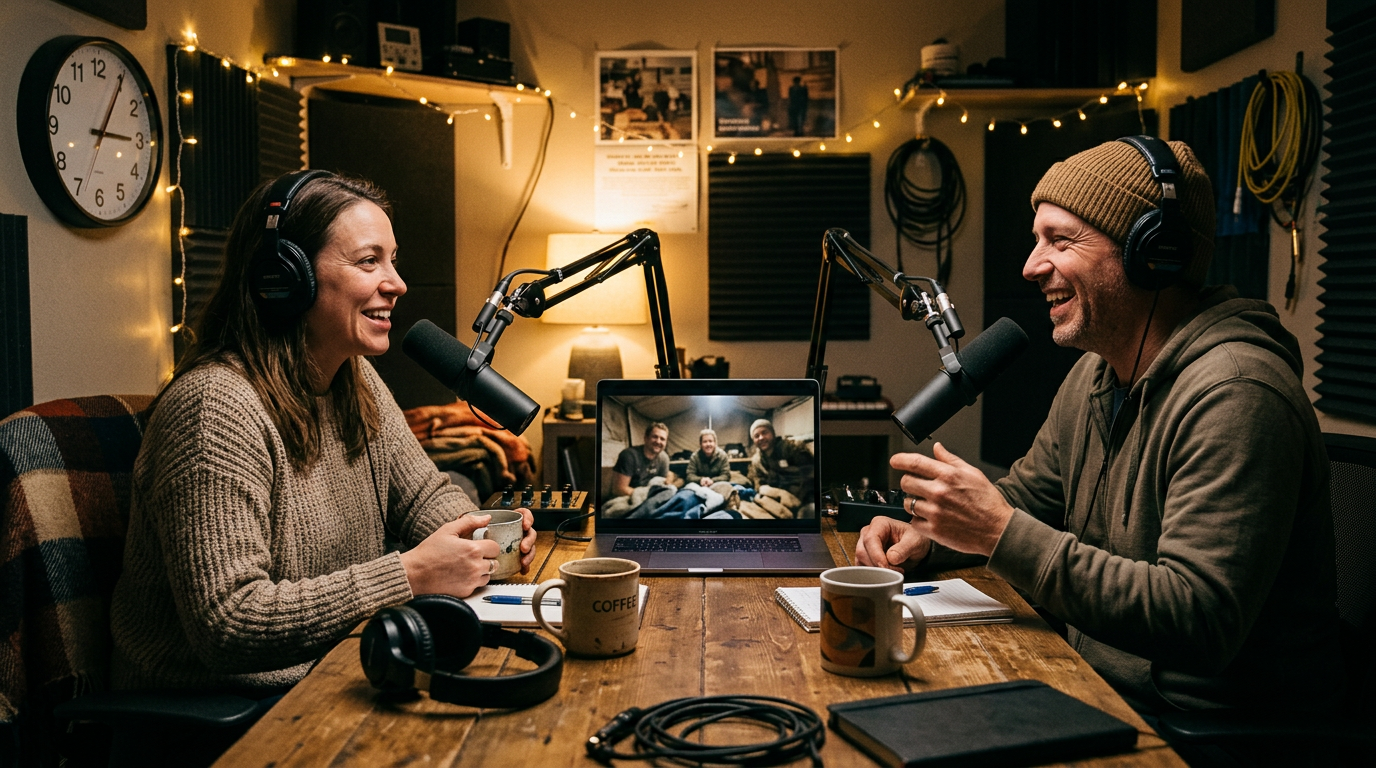
In November 2016, I pitched what I described at the time as “an insane idea”: go live on Giving Tuesday with video and audio for the full 24 hours. Midnight to midnight. No naps.
I was hosting What a Relief!, Islamic Relief USA’s weekly podcast, with my co-host R. Mordant Mahon. Most organizations treat Giving Tuesday as an email sequence and a donate button. We wanted to treat it like a telethon, a radio marathon, and a field trip all at once. So we emptied the bag of tricks.
With Giving Tuesday 2026 landing on December 1, now is the time to plan. Here are the Giving Tuesday campaign ideas I’d still steal from that 24-hour marathon, and what I’d do differently today.
Why Giving Tuesday campaign ideas need to be more than an ask
Giving Tuesday keeps getting bigger. Americans gave $4.0 billion on Giving Tuesday 2025, and 38.1 million people took part. But the number I find more interesting is buried in the breakdown: the count of people who spoke up for causes jumped 26%, far faster than the number of people giving money.
People don’t just want to give on Giving Tuesday. They want to participate. An inbox full of “last chance to double your gift” emails doesn’t give them anything to participate in. A live show does.
1. Put donors in the room with the work
The heart of our marathon was live calls to Islamic Relief field offices: Russia, Pakistan, the brand-new Philippines office, and, if we could make the logistics work, Syria. Listeners could hear live reports on what their donations supported and ask the field staff their own questions on air. We’d never been able to offer that before.
That’s the whole idea in one sentence: stop describing the work and let people meet it. Your version might be a program manager on a video call, a volunteer at the food pantry, or a scholarship recipient reading a thank-you note. Any live, unscripted connection beats another infographic.
2. Bring back your regulars
We invited back guests from past episodes, including singers Alman Nusrat, Ghuydar Bashmaf, and Khalil Ismail. Returning guests aren’t only good content. Each one brings their own audience along and has a reason to share the stream.
Look at who has already shown up for you this year: speakers, partners, volunteers, board members with a following. Give them a time slot and a reason to invite their people.
3. Be everywhere your people already are
In 2016 you could catch the show through the regular podcast feed, YouTube Live, or a Facebook chat room, all linked from one event page. We didn’t make anyone switch platforms to join us.
The platforms have changed since then, but the rule hasn’t. Stream where your audience already spends time, and make one simple landing page the source of truth for every link.
4. Publish the schedule
We posted a schedule of special guests on the event page so people could tune in for the segment they cared about. Nobody watches 24 hours of anything. But plenty of people will show up at 2 p.m. to hear someone they love.
A schedule turns a stream into appointment viewing. It also gives your social team 24 posts’ worth of reasons to remind people.
5. Plan for the heavy moments
We tried to keep it light, and I promised the jokes would get worse the more tired I got. But I also knew conversations about Syria and Myanmar could turn heavy and emotional. When that happened, we let them. Laughter helps, but some topics need to be heard.
Decide in advance how you’ll handle hard stories: who speaks, what content warnings you’ll give, and how you’ll move back to lighter segments without it feeling like whiplash.
6. Be honest about the human cost
Twenty-four hours with no naps is a stunt, and stunts cost something. If you try a marathon format, build in co-hosts, handoffs, food, and a producer who is not on camera and can tell you when you’re fading.
And you don’t need 24 hours. A three-hour live block, a lunch-hour stream, or a “follow the sun” format that hands off between offices in different time zones captures most of the magic with far less exhaustion.
What I’d do differently in 2026
- Ask for the second gift before the first one lands. Giving Tuesday donors are unusually loyal: 65% of 2024 Giving Tuesday donors gave again in 2025, compared with 52% of donors who gave earlier in the year. Build the recurring-gift ask and the thank-you sequence into the live show itself.
- Clip everything. A 24-hour stream is also 24 hours of raw footage. Plan the short clips, quotes, and field-office moments you’ll cut for social in December and January.
- Make giving one tap. Put a QR code and a short link on screen at all times, and make sure your donation form works with mobile wallets.
- Keep the politics out of it. If your stream runs near an election cycle, remember the 501(c)(3) election rules apply to live content too.
The real lesson
The best Giving Tuesday campaign ideas don’t start with “how do we get more gifts?” They start with “how do we let people feel part of this?” The gifts follow the feeling.
We did it with no sleep, a stack of phone numbers for field offices across three continents, and a lot of bad late-night jokes. You can do it with a three-hour stream and a good schedule. Either way: stop asking people to watch from the outside. Invite them in.