

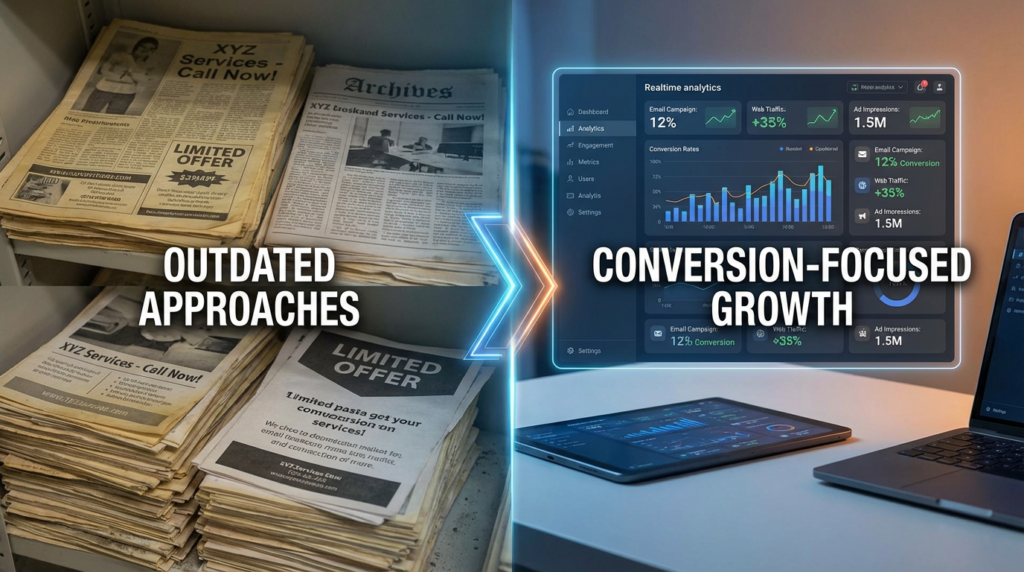
The marketing world is shifting faster than ever before, and businesses that cling to outdated strategies are watching their competitors pull ahead. If you’ve noticed declining engagement rates, shrinking ROI, or customers who seem increasingly difficult to reach, it’s time to face a crucial reality: your marketing strategy needs to change. The question isn’t whether to evolve your approach, but how quickly you can adapt to stay relevant in an increasingly competitive marketplace.
The Forces Driving Marketing Change
Today’s consumers operate in a fundamentally different environment than they did just five years ago. Privacy regulations like GDPR and iOS 14.5 have reshaped how we collect and use customer data. Third-party cookies are disappearing, social media algorithms change monthly, and consumer attention spans continue to fragment across an ever-expanding array of platforms and devices.
These shifts aren’t temporary disruptions – they represent permanent changes to the marketing landscape. Businesses that recognize this reality and proactively adjust their strategies are positioning themselves for long-term success, while those waiting for things to “return to normal” are setting themselves up for irrelevance.
Signs Your Marketing Strategy Needs an Overhaul
How do you know when it’s time to change your marketing strategy? Several key indicators should trigger immediate action. First, declining performance metrics across multiple channels suggest your current approach is losing effectiveness. If your email open rates, social media engagement, and website conversion rates are all trending downward despite consistent effort, your strategy may be misaligned with current market realities.
Another critical warning sign is when your customer acquisition costs start climbing while customer lifetime value remains flat or decreases. This squeeze indicates that your marketing isn’t reaching the right audiences efficiently, or that the messaging no longer resonates with your target market’s evolving needs and preferences.
Finally, if you’re struggling to reach younger demographics or finding that your brand feels disconnected from current cultural conversations, these are clear signals that your marketing approach has become outdated and needs strategic revision.
Building a Future-Ready Marketing Framework
Successful marketing change starts with embracing a customer-centric approach that prioritizes genuine value creation over promotional messaging. Modern consumers are bombarded with advertisements and have developed sophisticated filters for identifying and ignoring traditional sales tactics. Your new strategy should focus on solving real problems, providing useful information, and creating meaningful connections with your audience.
Data-driven decision making becomes even more critical in this new environment. However, the focus should shift from simply collecting more data to developing deeper insights about customer behavior, preferences, and pain points. Invest in analytics tools that help you understand the customer journey across multiple touchpoints, and use these insights to create more personalized and relevant experiences.
Agility and experimentation should be built into your marketing DNA. The days of annual marketing plans that remain unchanged for twelve months are over. Successful modern marketing requires continuous testing, rapid iteration, and the ability to pivot quickly when market conditions change or new opportunities emerge.
Practical Steps for Marketing Transformation
Begin your marketing transformation by conducting a comprehensive audit of your current efforts. Analyze performance data across all channels, survey your customers about their preferences and pain points, and honestly assess which tactics are still delivering results versus those that have become ineffective.
Next, develop a clear understanding of your evolving customer base. Create updated buyer personas that reflect current demographic trends, communication preferences, and purchasing behaviors. Pay particular attention to how different generations interact with your brand and adjust your messaging and channel selection accordingly.
Implement a test-and-learn approach to new initiatives. Rather than overhauling everything at once, identify specific areas for improvement and run controlled experiments to validate new approaches before scaling them across your entire marketing operation. This reduces risk while building organizational confidence in change.
Measuring Success in the New Marketing Era
Traditional marketing metrics like impressions and click-through rates provide incomplete pictures of modern marketing effectiveness. Focus on metrics that directly correlate with business outcomes: customer lifetime value, retention rates, referral generation, and revenue attribution across the entire customer journey.
Brand sentiment and share of voice in relevant conversations have become increasingly important indicators of marketing success. Monitor how your brand is perceived in social media discussions, review platforms, and industry forums to gauge whether your marketing changes are improving your reputation and market position.
The marketing landscape will continue evolving at an accelerating pace, making adaptability your most valuable asset. Companies that embrace change as a constant and build flexibility into their marketing strategies will thrive, while those that resist evolution will find themselves struggling to remain relevant. The time to change your marketing strategy isn’t coming – it’s here. The only question is whether you’ll lead the transformation or be forced to catch up later.